Tuesday, November 07, 2006

Healthy and Wealthy

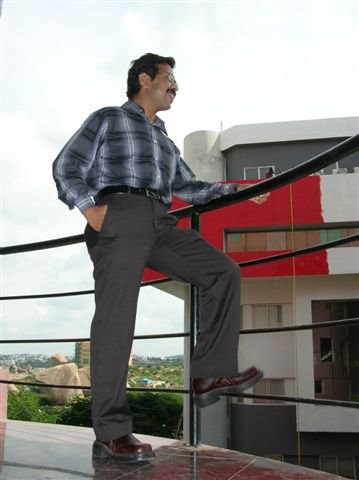
Early every morning I drive down to the health club run by a close friend of mine: Azharuddin (not connected to the ex-Indian captain who incidentally also runs a health club in Hyderabad). Azhar loves his gym – he is in the business of transforming people.

Building a business whose objective is to make people happy has always fascinated me. Consider this:

The VLCC group was started in 1989 by Vandana Luthra and is today a Rs. 1.40 Billion company.

Both the large US health club chains: 24- Hour Fitness & Bally Fitness was started in 1983 as single club locations. Both are currently at over USD 1 billion in revenues. 24-Hour Fitness is still managed by its founder Mark S. Mastrov.

Sid and Jenny Craig founded Jenny Craig Inc., in Australia and over 20 years built out a multi-national business with 655 Centers operating in six countries.

In India, the business of health, fitness & sports has been centered around sponsorship and telecast of cricket. The following strands of business models seem to be now emerging:

Sports Events such as the Hyderabad Run, The marathons in Pune, Delhi and Mumbai.

Sports Tourism – tours for sports lovers.

Health clubs – Talwalkars is the only genuine chain that we have in India at this point.

Recreational Clubs (golf, tennis, dining facilities) funded by membership fees.

Entrepreneurs in India are experimenting along all or some of the above approaches. For example, Saumil Majmudar has founded Sportz Village focusing on the relatively wide portfolio of business lines: sports facilities, sports events, sports tours and sponsorship. Urban Yoga, a brand of the Indus-League Clothing Ltd. (ICICI Ventures and Draper International had originally funded this company which has now been sold to Pantaloon) is setting up Yoga Studios as part of the brand extension of their clothing line.

Is there possibility of building up a local Indian brand in this category to exit out as part of a global M&A deal? – that is a question that arises given the changing lifestyles of the middle class in this emerging companies.

While you ponder that question here are details of some Private Equity deals:

European deals

LA Fitness (owned by MidOcean Partners) and and Total Fitness (owned by Legal and General Ventures) acquired Esporta from Duke Street Capital. Esporta operates more than 50 clubs in UK at a total deal size of approx. £640m in 2006.

Legal and General Ventures acquired Total Fitness which operates 21 clubs in North West England at an undisclosed sum in 2004.

Boundary acquired The Club Company Limited which operates 11 country clubs and golf facilities in England at a sum of £96m in 2006.

Burgolf Investments BV acquired BlueGreen from Duke Street Capital. BlueGreen is a golf club and hotel company in France at a Undisclosed in 2004.


US deals

Forstmann Little acquired 24 Hour Fitness at an undisclosed sum in 2005.

KSL Capital Partners acquired ClubCorp Inc. which operates 170 golf courses and clubs at a sum of USD 1.8 billion in 2006.

Angelo Gordon acquired Crunch Fitness a Health club operator at a sum of USD 45 million (includes clubs acquired from other chains too) in 2006.

5 comments:

Navin said...
This post has been removed by the author.
Navin said...

Very True. In fact I think there is huge potenial for the business of fitness - atleast in the Metros. The only prohibiting factor currently is the cost. I don't think the general youth in the Metros is quite okay with the current pricing levels. Talwalkar would cost you roughly Rs. 1500 p.m (should you choose to go for the 3 month plan) - and that's only for the Gym. Add to that other facilities like a pool, sauna, steam, yoga, etc... prices could be as much as 3 - 4 times.

It's high time that we saw a drop in the prices. Of course this can happen only if fitness centeres can capitalize on economies of scale.

Picture this - LA Fitness - a state-of-the-art fitness center (Gym, pool, steam, jacuzzi, the works...) in the UK costs just 40 GBP (Rs. 3200) - hardly 2% of the avg income. Something similar in India currently would cost you atleast Rs 4000 p.m.(about 15-20% of the average Indian salaries)

With some of the biggies coming in, prices will surely come down. I hope this happens in the next 2-3 years.

With the changing working styles that confines one to that comfortable cubicle with hardly any neccessity to move around, it's high time our youth started focussing on the health.

-Navin

D D Ganguly said...

Great post, Sanjoy.

There's also a need home style healthy food.

Jojo said...

I'm not too impressed by the fitness chain business models cause most of them don't offer any differntiation and are easily commodotised business. For me, it really doesn't matter whether I go to LA Fitness, or Talwalkars or to the gym in my club. My choice is dictated by proximity, convenience and price.

One 'business model', if you can call it that, that really impresses me is the BKS Iyengar yoga model. They focus on the fundamentals - proper training, certification and 'quality' and leave the rest to evengalists/ entrepreneurs. In the US, there are some 19 million regular yoga practioners, UK has 20 times more certified BKS Iyengar yoga teachers than India, and Yoga is spreading like wild fire across Europe...and predominant among these is BKS. And his investment?..only his skill, knowledge and passion.

It's another thing that its NOT a business for BKS, but if one were to measure it using the same yardsticks that we use to measure regular business, my guess is that it'll put most fitness chains to shame.

Kamalini said...

Well, i'd go along with pricing and convenience...time is a huge factor that influences an Indian to be fit. There has to be some inspiration, some pull for one to wish to go to a gym. As rightly pointed out, there has to be a good food diet chart handout too...i personally would only go to a gym and did too, because i wanted to be slim, healthy as a by-product and of course feel great about me.
I believe unless there is a huge societal pressure, one would not wish to either look great or be fit. The measure of fitness in our country remains very vague. If the gym culture wishes to work largescale, it has to do a lot more to inspire potential customers and should certainly be a lot more professional and priced better.
People will also pay a lot to look good, but that's a tiny minority.
People like me, yes, i would first see my convenience, affordability and only then choose to go to a gym. It's not boring, it's great fun but in bits and pieces, not forever.
A gym has to have a unique mantra too, that's vital to its survival. Some survive on word of mouth, but most on quality and uniqueness in terms of what it offers when it comes to personal care....voila!